Elon Musk’s D.O.G.E. Logo: A Not-So-Subtle Dog Whistle Hidden in Plain Sight

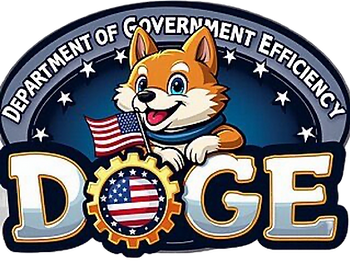
Elon Musk has once again injected far-right iconography into public discourse—this time under the guise of internet humor. His newly posted D.O.G.E. logo on X, supposedly a lighthearted nod to Dogecoin and “government efficiency,” features a gear symbol and two sets of eight stars—both of which have longstanding ties to neo-Nazi movements.
For those paying attention, this isn’t an isolated incident. It’s part of a clear pattern: a high-profile figure, known for engaging with far-right ideologies, dropping coded messages that extremists recognize while the general public dismisses them as coincidence. The plausible deniability is built in. But as the old saying goes: Once is an accident. Twice is intentional. Three times is enemy action.
The Symbols Speak Louder Than Excuses
The Gear Symbol
A longstanding image in far-right and neo-Nazi circles, gears have been used to represent nationalist labor movements, particularly the Strasserist faction of Nazism, which fused fascism with socialist rhetoric. The gear also appears in Blood and Soil ideology, which promotes a racialized connection between ethnicity and land ownership. This is not an arbitrary design choice.
The 88 Stars
The number 88 is one of the most notorious neo-Nazi dog whistles, serving as a coded reference to “Heil Hitler” (H being the 8th letter of the alphabet). While Musk’s logo separates the stars into two groups of eight, the symbolism remains intact for those who recognize it. Whether the average X user notices is irrelevant—the intended audience absolutely does.
Musk’s Long History of ‘Accidental’ Dog Whistles
This is just the latest in a series of incidents where Musk has platformed, amplified, or engaged with far-right ideologies while maintaining plausible deniability.
• Amplifying the Great Replacement Theory – Musk has repeatedly warned about “declining birthrates” among white populations, a central white nationalist talking point.
• Boosting Far-Right Figures – From engaging with figures like Andrew Tate and Libs of TikTok to reinstating known neo-Nazis on X, Musk has consistently given extremists a louder megaphone.
• Endorsing an Antisemitic Tweet – In November 2023, Musk explicitly agreed with a post pushing a classic antisemitic trope about Jewish influence in media and politics.
• Using Far-Right Slogans – His repeated use of “Take the Red Pill” and “The Woke Mind Virus” aligns with radicalization tactics in online extremist spaces.
• Spreading Misinformation About Jan. 6 – Musk amplified conspiracy theories about the insurrection, subtly undermining its severity while fostering narratives that align with far-right revisionism.
The list goes on, but the pattern is clear: Musk knows exactly what he’s doing.
The Playbook of Plausible Deniability
Musk’s defenders will argue this is all a stretch—that he’s just trolling, that people are overanalyzing, or that he can’t possibly know what every symbol means.
That’s the whole point of dog whistles: they are designed to be dismissed by the uninformed while signaling something very specific to those in the know.
By repeatedly engaging in this behavior, Musk is conditioning his audience, normalizing extremist rhetoric under the guise of free speech, and testing the limits of what can be said without consequence. Every “accident” is another brick in the road toward mainstreaming far-right ideology.
Why This Matters
We’ve seen this strategy before. Historical revisionism, the reintroduction of extremist symbols into public discourse, and shifting the Overton Window further right are hallmarks of authoritarian movements. Musk’s influence on public perception is profound—especially when he controls one of the largest social media platforms in the world.
At what point do we stop giving him the benefit of the doubt? When do we acknowledge that this is not accidental but deliberate?
Musk is not just flirting with the far-right—he’s giving them a home. And with every “coincidental” dog whistle, he’s making sure they feel welcome.
The Rise of Hate: A Disturbing National Trend
The resurgence of neo-Nazi and KKK activity in states like Tennessee and Ohio is not an isolated phenomenon—it is a symptom of a broader cultural and political shift that emboldens hate groups, allows dog whistles to go unchecked, and normalizes extremism under the guise of free speech.
From white supremacist marches in Nashville to KKK flyers littering suburban streets in Ohio, these groups are not just emerging from the shadows. They are stepping forward with confidence, believing that their ideology has a place in mainstream discourse once again.
Ohio: A Disturbing Pattern of Hate
• Neo-Nazi Demonstrations: In February 2025, residents of Lincoln Heights, Ohio, confronted a group of neo-Nazis displaying swastika flags on an overpass. Their swift response drove the group away, showcasing grassroots resistance against hate.
• Legal Action Against Blood Tribe: Springfield, Ohio, has filed a federal lawsuit against the neo-Nazi group Blood Tribe, alleging harassment and intimidation against the city’s Haitian community. The lawsuit aims to curb the group’s influence.
• KKK Propaganda: KKK-affiliated flyers containing racist and xenophobic messages have been distributed across Ohio neighborhoods, raising concerns among residents and law enforcement.
Tennessee: Escalation of Extremist Activities
• KKK Flyers in Chattanooga: In January 2025, Chattanooga residents discovered KKK flyers scattered in their neighborhoods. The incident prompted police investigations and community discussions on countering extremist recruitment.
• Neo-Nazi Marches in Nashville: Nashville has seen consecutive neo-Nazi rallies, with demonstrators marching through the downtown area, including Lower Broadway’s entertainment district. These public displays of hate have drawn widespread condemnation. It has seeped into their women's luncheons when discussing education for the young.
A National Concern
These incidents are not limited to Ohio and Tennessee. Data shows a nationwide increase in neo-Nazi demonstrations, with 34 events across 16 states tracked in 2024 alone. The normalization of extremist ideologies is a growing and deeply concerning trend.
Community Resilience and the Path Forward
Despite this rise in hate group activity, communities are fighting back. The swift response from Lincoln Heights residents and legal actions in Springfield exemplify how grassroots movements and policy measures can counter extremism. But these efforts must be sustained.
We need:
• Education initiatives that address radicalization and propaganda.
• Stronger legal actions against hate groups.
• Community mobilization to reject and actively challenge extremism.
Silence is Complicity. The Time to Act is Now.
The resurgence of neo-Nazi and KKK activities serves as a stark reminder: this is not a time for passive observation.
This is not accidental. It is the result of calculated rhetoric, policy shifts, and cultural signaling from those in power—figures who claim plausible deniability while giving oxygen to these movements.
But history teaches us a brutal lesson: silence is complicity. When communities, lawmakers, and institutions refuse to call out and dismantle these movements, they allow them to grow.
The citizens of Lincoln Heights, Ohio, who confronted and chased away a group of neo-Nazis, have shown us what grassroots resistance looks like. Springfield’s legal actions against extremist groups prove that policy can be a weapon against hate.
These are the actions we must demand on every level—local, state, and national.
This is not a moment to watch in horror and then move on. It is a moment to act.
Speak out. Organize. Demand accountability. Hold leaders responsible for their words—and their silence.
Because history will remember who stood against this rising tide—and who did nothing.


Comments